
Odds primer
Fractional Odds Explained, With a Decimal and American Odds Converter
Fractional odds tell you profit against stake. Learn to read them, convert them to decimal or American prices in your head, and see what a price says about a horse's chance.
By Conor FurlongChecked
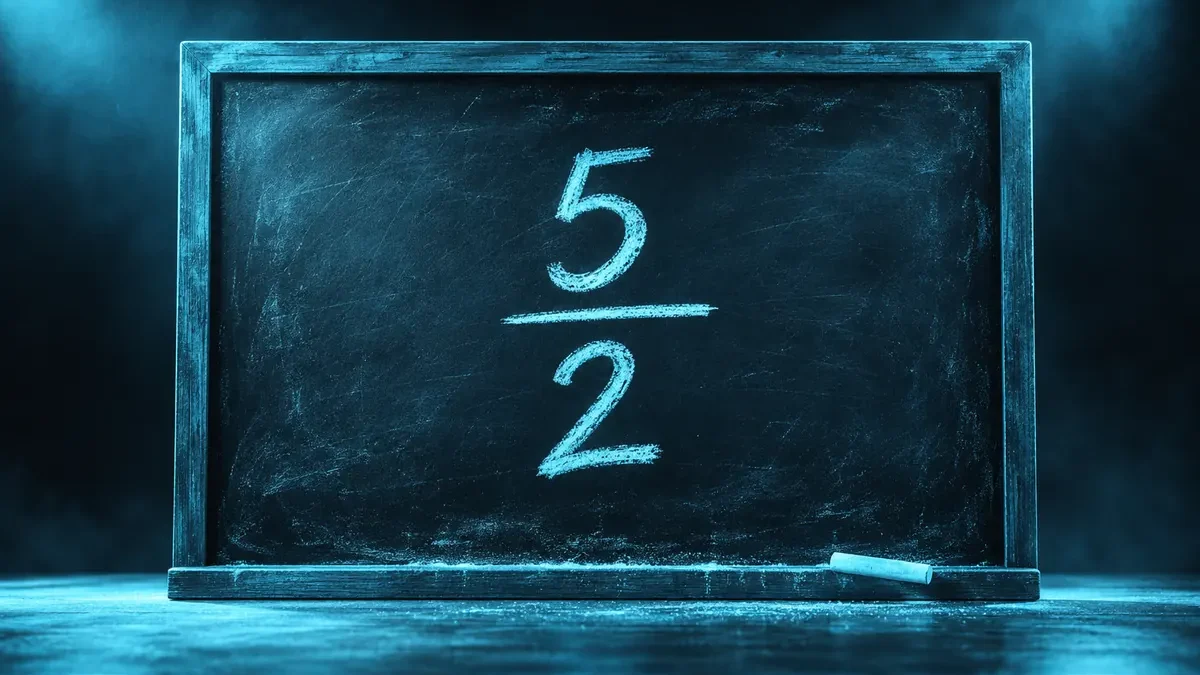
Fractional odds show the profit you make against the stake: 5/2 means you win EUR 5 for every EUR 2 staked, and you also get the stake back. Convert them to decimal by dividing the top number by the bottom one and adding 1, so 5/2 becomes 3.50.
Racing in Ireland is traditionally priced in fractions, and bookmaker apps commonly offer a decimal display as well. Switching changes how the price is written, not the bet. Below: reading the fraction, a converter table, American odds and the implied chance inside every price. For live sums, our bet calculator handles fractions and decimals. 18+.
How to read fractional odds
The right-hand number is what you stake, the left-hand number is what you win. A few common shapes:
- Odds-against, such as 5/2 or 10/1: the profit is bigger than the stake. At 10/1, EUR 10 wins EUR 100 and returns EUR 110.
- Evens, written 1/1 or Evs: profit equals stake. EUR 10 returns EUR 20.
- Odds-on, such as 4/6: the profit is smaller than the stake. EUR 6 wins EUR 4; EUR 12 wins EUR 8 and returns EUR 20. Galway Racecourse describes an odds-on price as a predicted chance above 50%.
Some fractions look awkward because they are traditional rungs on the bookmakers' ladder rather than tidy maths: 11/8, 13/8, 15/8, 100/30. They read the same way. At 11/8, EUR 8 wins EUR 11 and returns EUR 19.
Fractional to decimal odds
Decimal odds include the stake. The formula is: decimal = (top / bottom) + 1. A EUR 10 bet at 9/4 is therefore 10 x 3.25 = EUR 32.50 back, of which EUR 22.50 is profit.
Going the other way, from decimal odds to a fraction, subtract 1 and express what is left as a fraction. 3.75 minus 1 is 2.75, which is 11/4. A price of 2.0 in fractional odds is evens. 1.50 is 1/2, a strong odds-on favourite. A quick sense check: any odds-against price converts to a decimal above 2.00, any odds-on price to one between 1.00 and 2.00, and evens sits exactly on 2.00.
Odds converter table
The common rungs, converted. American figures are rounded to the nearest whole number, decimals to two places, and the implied chance to one decimal place.
| Fractional | Decimal | American | Implied chance |
|---|---|---|---|
| 1/4 | 1.25 | -400 | 80.0% |
| 1/2 | 1.50 | -200 | 66.7% |
| 4/6 | 1.67 | -150 | 60.0% |
| 10/11 | 1.91 | -110 | 52.4% |
| Evens (1/1) | 2.00 | +100 | 50.0% |
| 6/4 | 2.50 | +150 | 40.0% |
| 2/1 | 3.00 | +200 | 33.3% |
| 9/4 | 3.25 | +225 | 30.8% |
| 5/2 | 3.50 | +250 | 28.6% |
| 3/1 | 4.00 | +300 | 25.0% |
| 5/1 | 6.00 | +500 | 16.7% |
| 10/1 | 11.00 | +1000 | 9.1% |
| 20/1 | 21.00 | +2000 | 4.8% |
American odds conversion
American (moneyline) odds turn up on NFL, NBA and other US markets. They are built around a 100 stake:
- A plus figure is the profit on 100 staked. +250 means 100 wins 250, the same as 5/2 or 3.50 decimal.
- A minus figure is what you must stake to win 100. -150 means 150 wins 100, the same as 4/6 or about 1.67 decimal.
The formulas, for anyone building a spreadsheet:
- American to decimal: for a plus price, (American / 100) + 1; for a minus price, (100 / the number without its sign) + 1.
- Fractional to American: at evens or bigger, multiply the fraction by 100 and add a plus sign (9/4 = +225); odds-on, divide 100 by the fraction and add a minus sign (4/6 = -150).
- American to fractional: +300 is 300/100, or 3/1; -200 is 100/200, or 1/2.
Implied probability: what the price says about the chance
Every price carries an implied chance. From decimal odds it is 1 divided by the decimal. From a fraction a/b it is b divided by (a + b): 5/2 gives 2/7, or 28.6%.
Add up the implied chances of every runner in a market and the total will exceed 100%. The excess is the bookmaker's margin, called the overround. A two-horse race with both runners at 4/6 adds up to 120%, a margin of 20 points; real markets are tighter on popular races and wider on obscure ones. Comparing that total across firms is a quick way to see who prices a race keenly. Exchanges, covered on our betting exchanges page, show decimal prices with commission charged on net winnings instead.
Using a betting odds converter in practice
Three habits save mistakes. First, convert before comparing: 11/8 and 2.40 look unrelated, yet 11/8 is 2.375, a fraction shorter. Second, remember the stake: decimal returns include it, fractional quotes do not. Third, when a price moves from 5/1 to 4/1, your implied-chance view should move from 16.7% to 20%; if your opinion of the horse has not changed, the value has gone.
Prices are the bookmaker's view plus a margin, not a promise of anything. Punters must be 18 or over, and a fixed weekly budget does more for your bank than any converter. Help is listed on our responsible gambling page.
Readers' questions
- What is 2.0 in fractional odds?
- Evens, written 1/1. A EUR 10 stake returns EUR 20, of which EUR 10 is profit.
- How do I convert fractional odds to decimal?
- Divide the first number by the second and add 1. 7/2 is 3.5 plus 1, so 4.50 in decimal.
- Is 4/6 better than evens?
- No, it pays less. At 4/6 a EUR 6 stake wins EUR 4; at evens it would win EUR 6. 4/6 marks a stronger favourite.
- What does a minus sign in American odds mean?
- It shows how much you stake to win 100. At -200 you stake 200 to win 100, which equals 1/2 in fractional odds.